Upscaling Mangrove Restoration for Coastal Hazard Reduction in a Deltaic Environment: Prioritizing Restoration Efforts for Nature-based Solutions in the Volta Delta
Project Information
This project is a collaboration between universities in the US and UK, along with NGO, university and community partners in Ghana, to better understand how to upscale locally appropriate mangrove Ecosystem-based Adaptation (EbA) across the Volta Delta and beyond. Coastal communities in the Volta Delta rely on abundant mangrove forest ecosystems for extractive resources such as fuelwood, as well as non-extractive benefits such as coastal hazard reduction. These mangrove resources, however, are threatened by unsustainable human activities and climate change.
Mangrove EbA has high potential for reducing vulnerability to coastal hazards while enhancing ecosystem health. However, implementation of mangrove EbA restoration and conservation projects remains low due to a lack of understanding of the various climate, hazard, environmental and social drivers that influence EbA potential and effectiveness.
This project will help upscale mangrove EbA in the Volta Delta by:
- Improving understanding of the human and natural factors that shape EbA effectiveness;
- Building local capacity to assess EbA potential, adaptively manage EbA projects, and conduct ecological mapping and monitoring of mangrove habitats; and
- Developing a web-based assessment tool that provides a spatial ranking of mangrove EbA potential.
Project Status
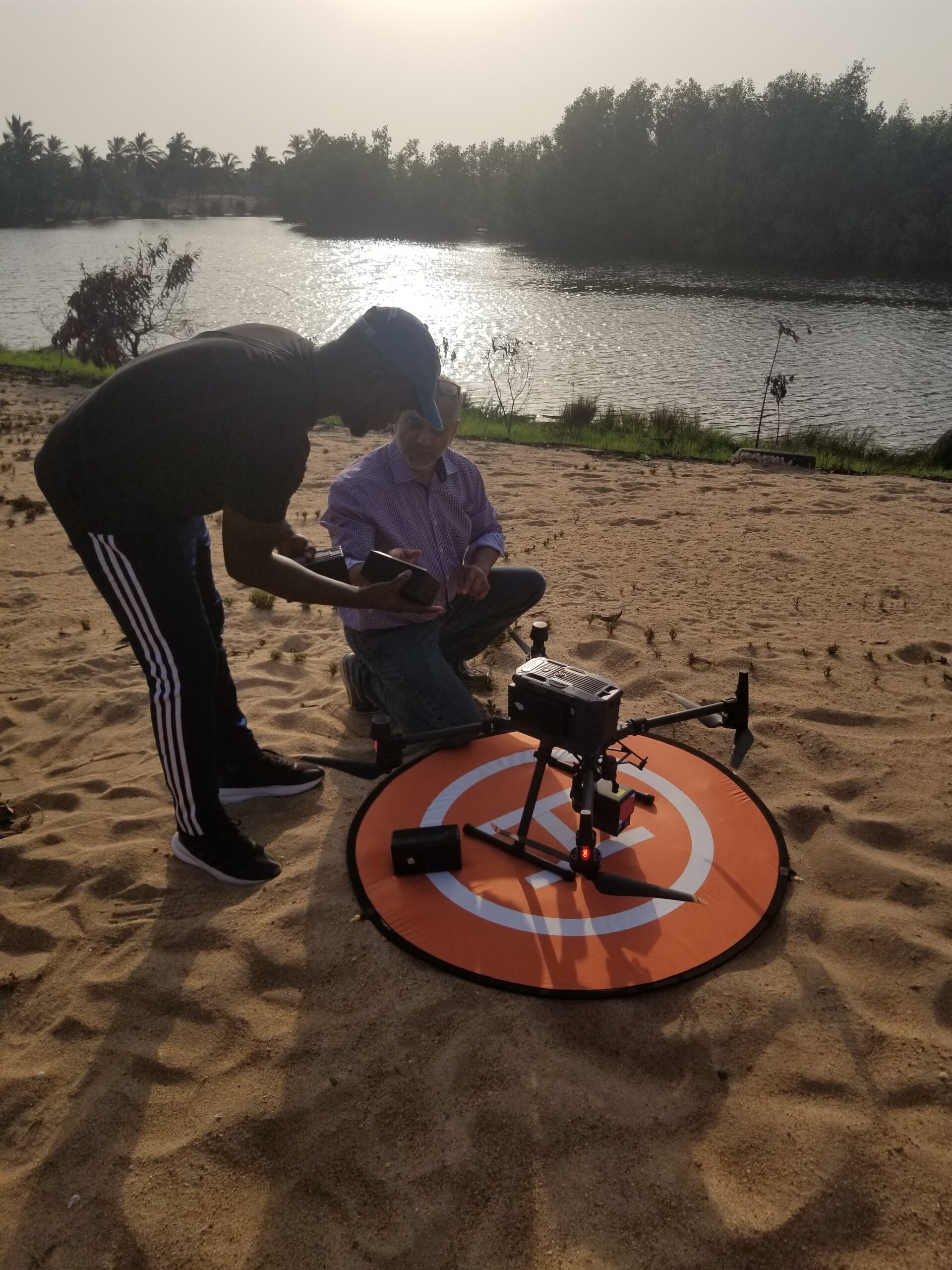
ECU has completed all four planned rounds of mangrove structure monitoring using drone-based LiDAR photogrammetry at their five study sites and are planning an additional fifth round of monitoring. The project team has also collected and are analyzing a lot of data on stakeholder mapped coastal hazards and mangrove restoration priority locations, as well as surveys of community members on questions of coastal hazard impacts, mangrove restoration priorities, successes and barriers. Through their activities, the project identified salinity intrusion as a key, though in some respects, overlooked, aspect of coastal hazards in the Volta Delta.
Project Achievements
- Acquiring drone-based LiDAR equipment by University of Ghana and training project team members in Ghana in deploying, maintaining, and conducting monitoring operations, including benchmarking, periodic monitoring, as well as data retrieval and analyses
- Training community enumerators to conduct surveys in local languages and translate to English
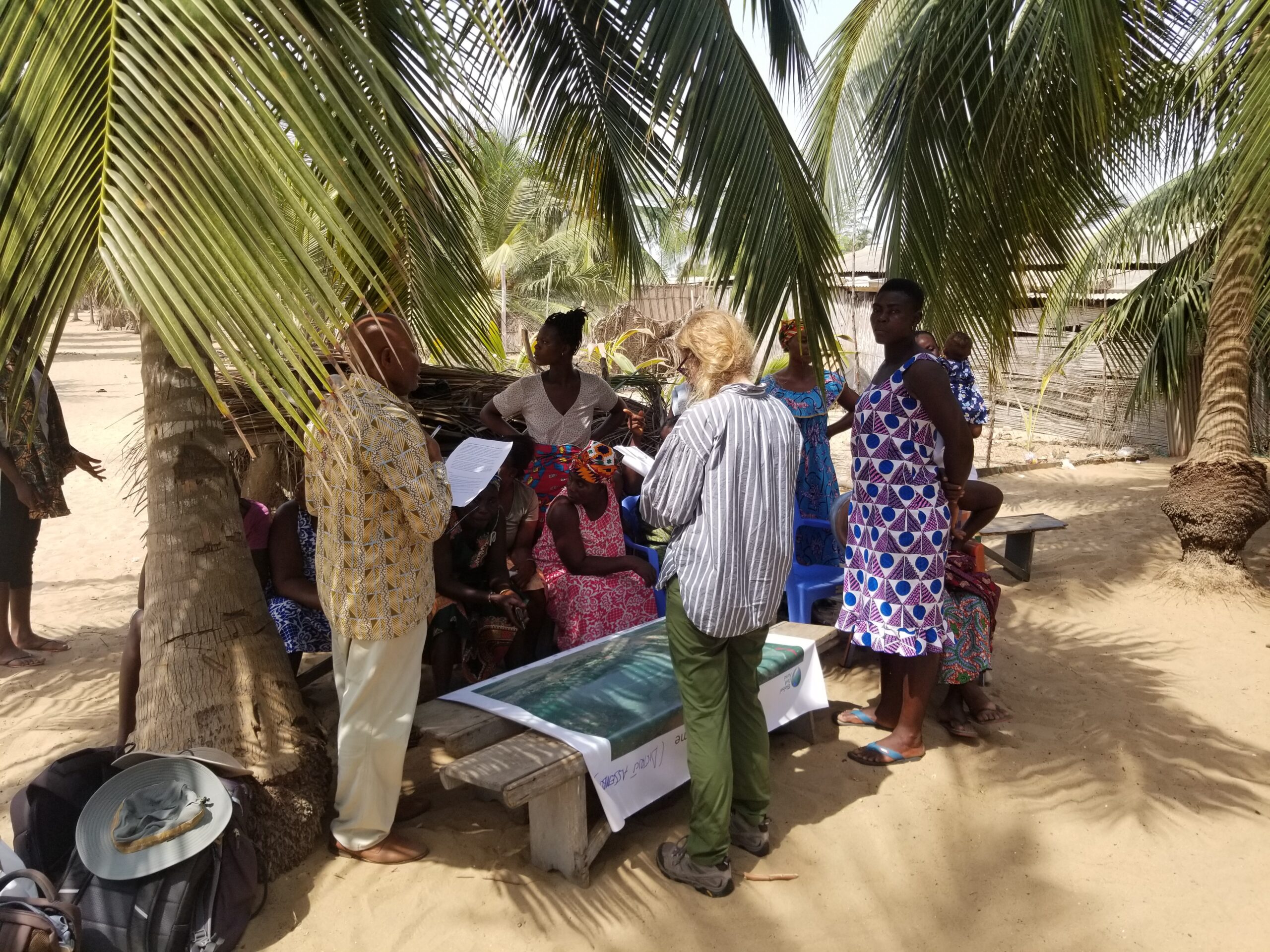
- Involving community members in participatory mapping exercises to identify coastal hazards and priority sites for mangrove conservation and restoration.
- Development of a book chapter, a conference session, and a review paper based on the activities of this project.