
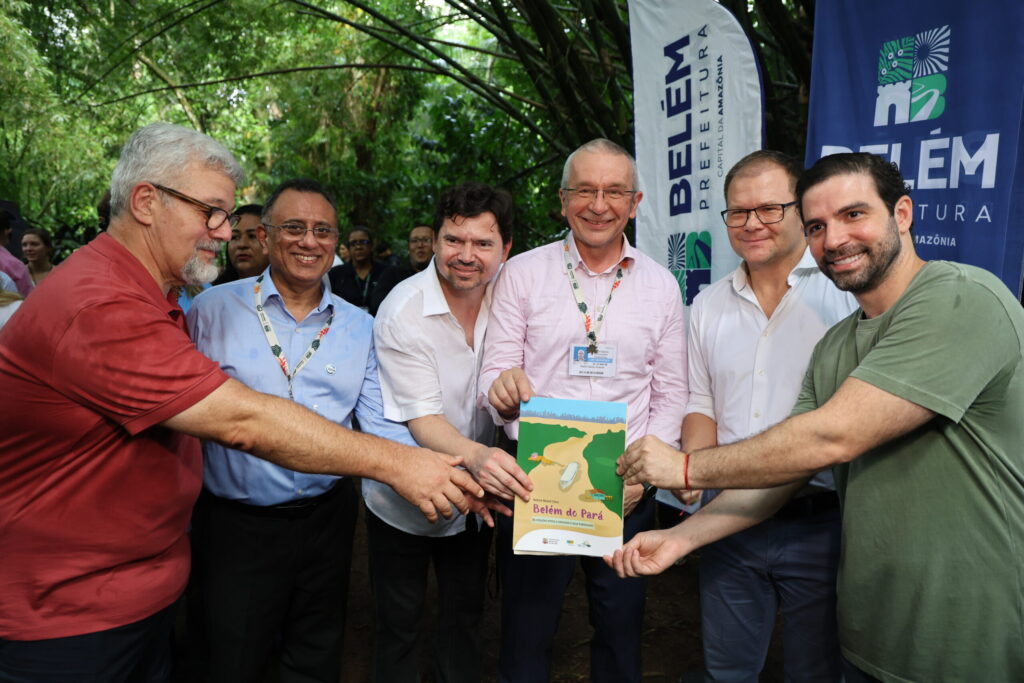
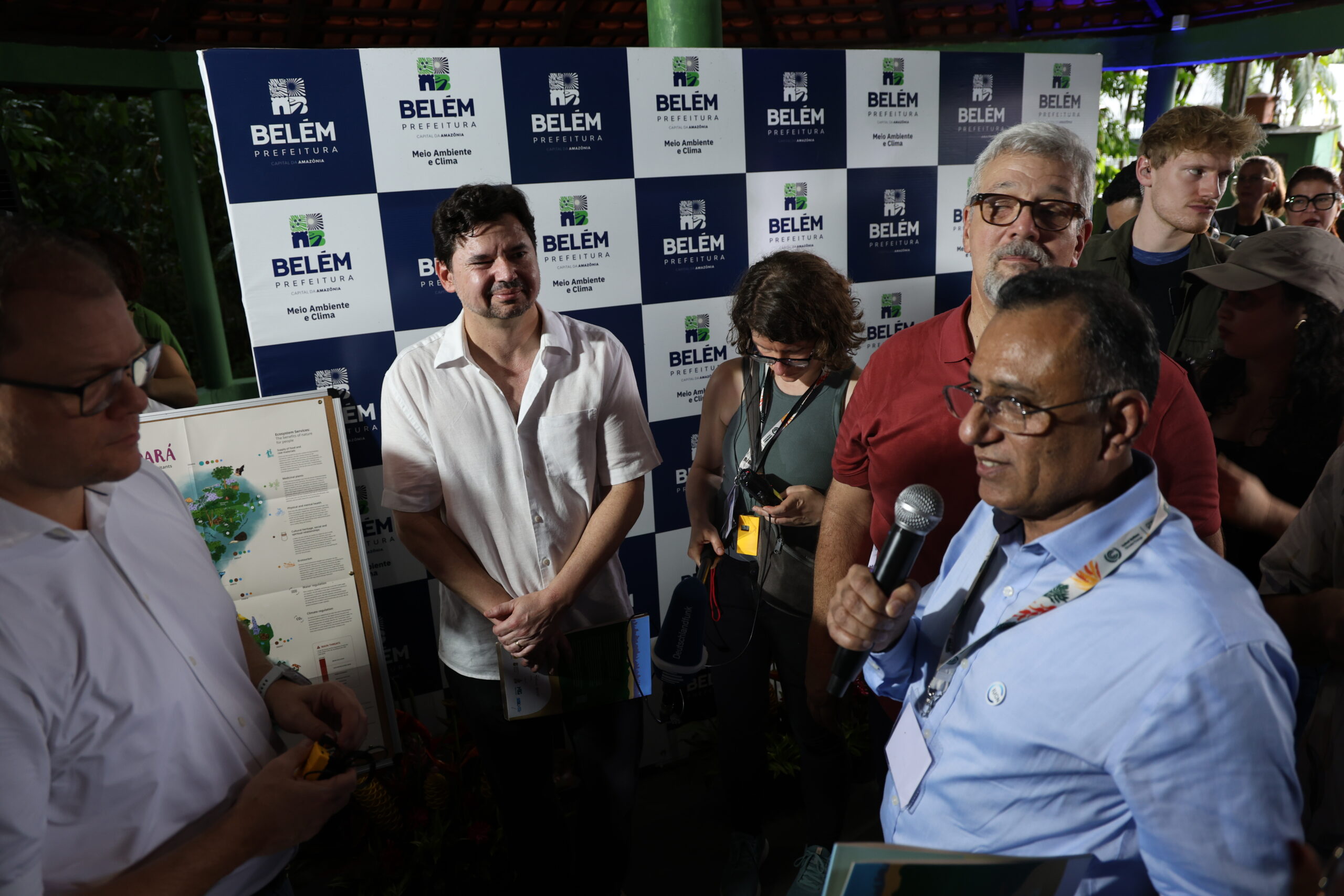
© IUCN – Antônio da Costa e Silva, National Secretary of Brazil’s Ministry of Cities; Mr Ali Raza Rizvi, IUCN; Mr Rodrigo Perpétuo, ICLEI; Mr Martin Krause, UNEP; Mr Carsten Schneider, BMUKN; Mr. Igor Normando, Mayor of Belém
Belém, Brazil, 15 November 2025 (IUCN) — A high-level delegation visited Gunnar Vingren Park in Belém today to showcase the city’s bold leadership in advancing biodiversity protection and climate resilience through Nature-based Solutions (NbS) for climate adaptation.
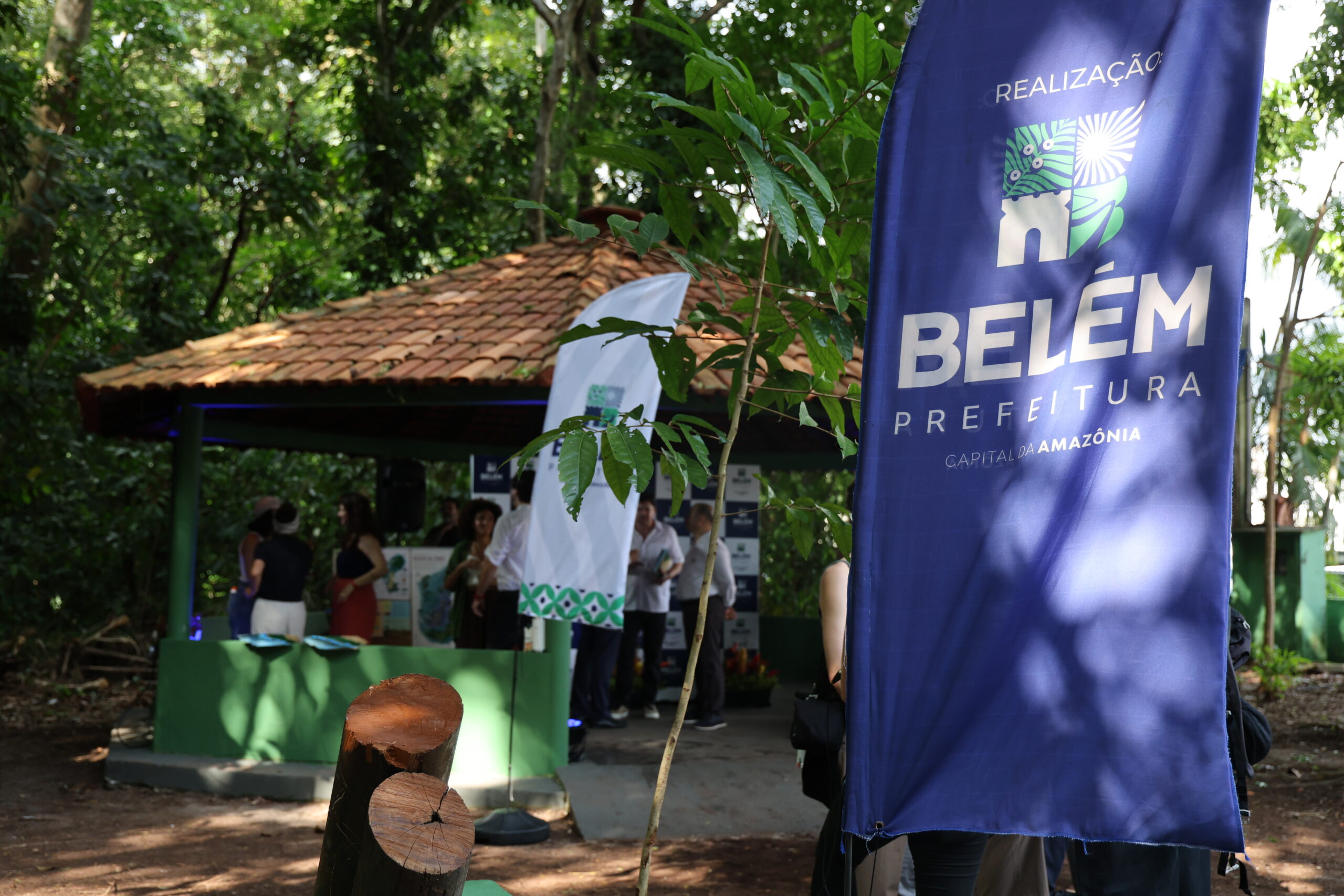
The park, which conserves important remnants of Amazonian forest, was selected for the visit as one of the priority sites identified through the NBCities project. The project supported Belém in integrating its climate and biodiversity agendas and in developing the “Polígono dos Parques” (Polygon of Parks) initiative, a programme developed to strengthen urban resilience through interconnected green spaces.
Germany’s Minister for the Environment, Climate Action, Nature Conservation and Nuclear Safety (BMUKN), Carsten Schneider, highlighted the global importance of protecting these remaining forests:
“We must protect the last pieces of the Amazon forest in Belém—not only for COP, but because the Amazon is the lungs of the world. We need to stay together, even after this conference of the future.”
António José da Costa Silva, the National Secretary of Brazil’s Minister of Cities, then emphasised the importance of aligning ecological and urban priorities, stating:
“We must protect the cities from climate change, and for this, we must integrate the agendas of cities with ecosystems and people.”
The visit, co-organised by the International Union for Conservation of Nature (IUCN); the UN Environment Programme (UNEP); ICLEI – Local Governments for Sustainability; BMUKN; and the International Climate Initiative (IKI), brought together key representatives, including Mr Schneider, Mr da Costa Silva, and Mr. Igor Normando, Mayor of Belém. It was organised in parallel with the 2025 UN Climate Change Conference (COP30) programme, highlighting how integrating the conservation of urban forests with adaptation efforts can transform cities into models of resilience and sustainability.
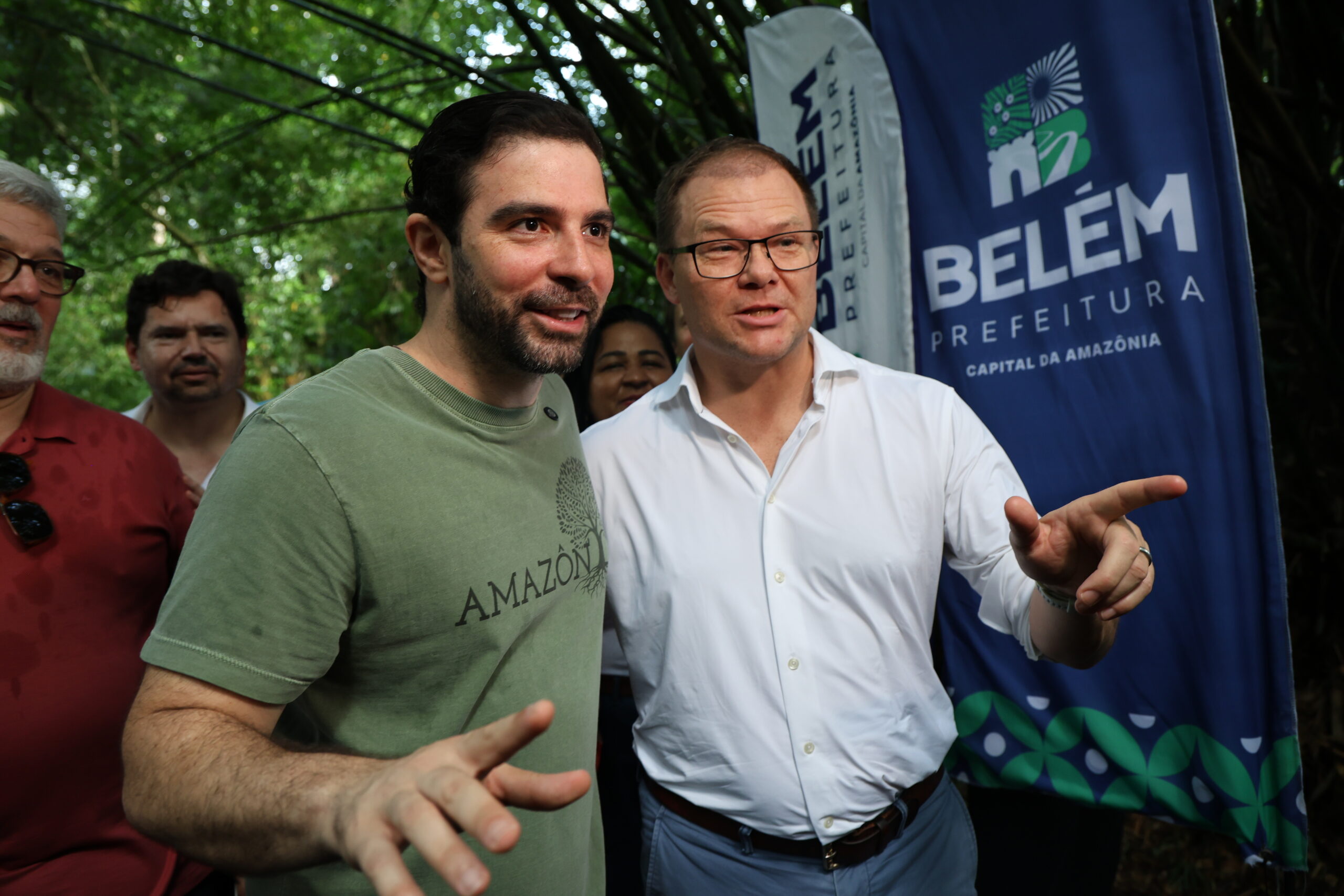
© IUCN – Mr Igor Normando, Mayor of Belém; Mr Carsten Schneider, BMUKN
Showcasing the NBCities project
The visit spotlighted theNature-Based Cities: Biodiversity and Climate Resilience for Urban Development Project (NBCities), implemented by the ICLEI South America Secretariat and financed by theGlobal Ecosystem-based Adaptation (EbA) Fund, a joint funding mechanism co-managed by IUCN and UNEP with support from IKI.
NBCities supported cities in translating global climate and biodiversity goals into local action, exemplifying how international collaboration drives tangible change at the municipal level. The project enabled Belém to integrate biodiversity and climate resilience into urban planning through key achievements, including:
Capacity building for city officials on NbS and urban planning;
Development of Belém’sClimate Risk and Vulnerabilities Assessment (2025) andEcosystem Services Diagnosis (2025); and
Mentorship for the Polígono dos Parques initiative, linking five major green areas of the city, including Gunnar Vingren Park, through Ecosystem-based Adaptation and NbS.
Although NBCities officially concluded in early 2025, its legacy continues through Polígono dos Parques, which is scaling up its impact by reducing climate risks, restoring green infrastructure and promoting inclusive, community-led governance. The initiative also generates sustainable livelihoods and bioeconomy opportunities for vulnerable populations.
“As we move from planning to implementation, having a solid evidence base is essential and that’s exactly what this ecosystem services diagnosis provides. Now, with a clear nature-based adaptation pathway for Belém, it’s time to turn this knowledge into action,” emphasised Rodrigo Perpétuo, Executive Secretary, ICLEI South America.
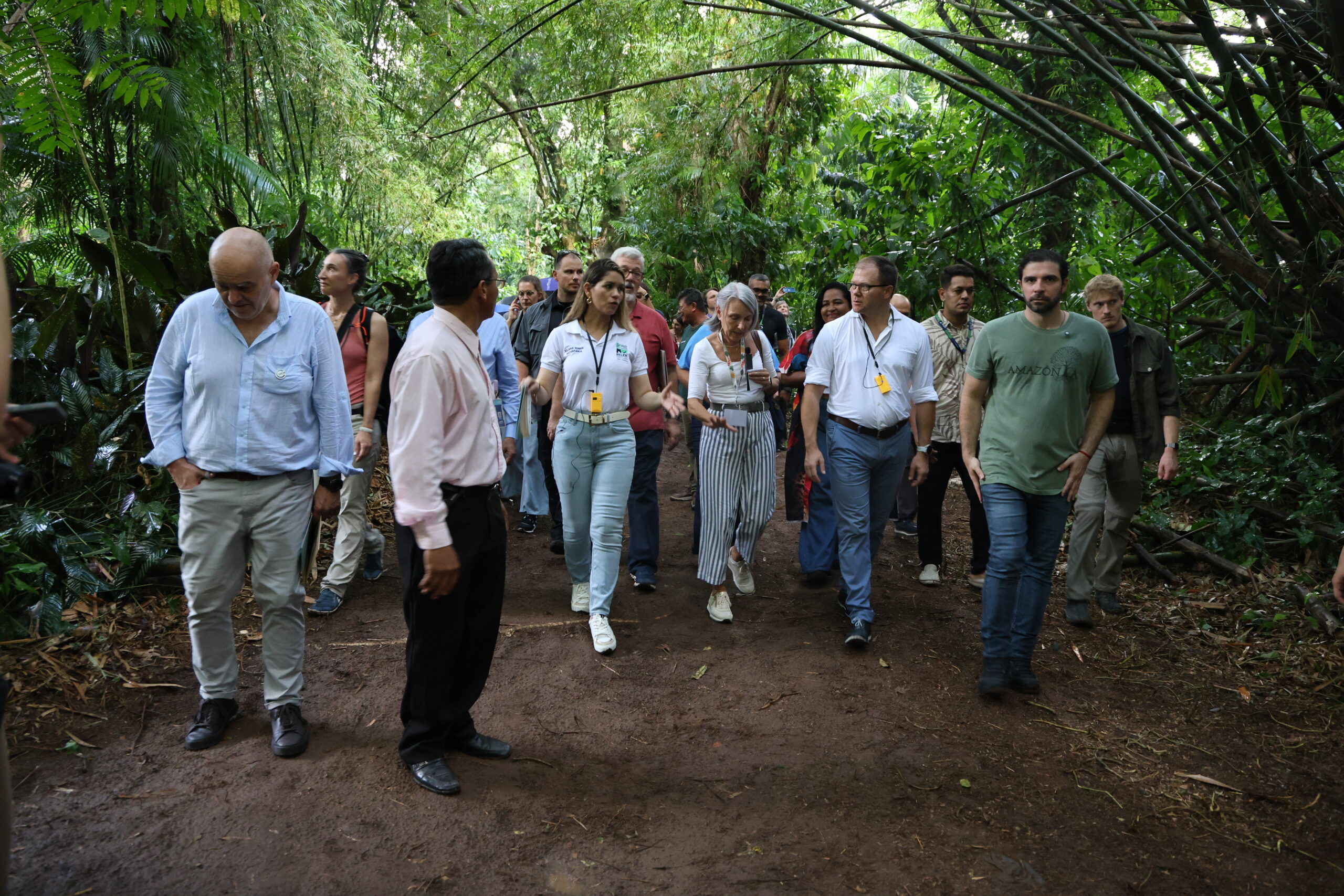
© IUCN – Participants at the visit
Belém’s leadership in urban adaptation
Gunnar Vingren Park, home to valuable remnants of Amazonian forest, was identified as a priority area in Belém’s Climate Risk and Vulnerabilities Assessment. The study highlighted how many areas of Belém face high exposure to flooding, coastal erosion, and the heat island effect due to dense urbanisation, limited vegetation and insufficient drainage infrastructure.
Meanwhile, the Diagnosis of Ecosystem Services reinforced the central role of forests and green areas in regulating the city’s climate and environmental quality, as well as their importance to residents’ daily lives and cultural practices. However, these benefits are not equally experienced across the population due to the deficit of green areas in many — particularly vulnerable — areas. Even where large preserved green areas exist, such as Gunnar Vingren Park, a lack of infrastructure and investment often hinders safe public access, isolating these areas from surrounding communities.
Mayor of Belém, Igor Normando underscored both the park’s significance and the city’s vision for its revitalisation:
“Belém is an extraordinary city, rich in culture, history and natural beauty. For centuries, the Amazon has helped the world breathe—now it is time for the world to help the Amazon survive.”
He further highlighted the importance of COP30 partnerships for revitalising the park:
“Gunnar Vingren Park desperately needs support to be restored as a great legacy of COP30. Together with the German government and partners, we aim to make it a place of exchange where countries learn about our forest, our rivers and their power in climate balance and resilience.”
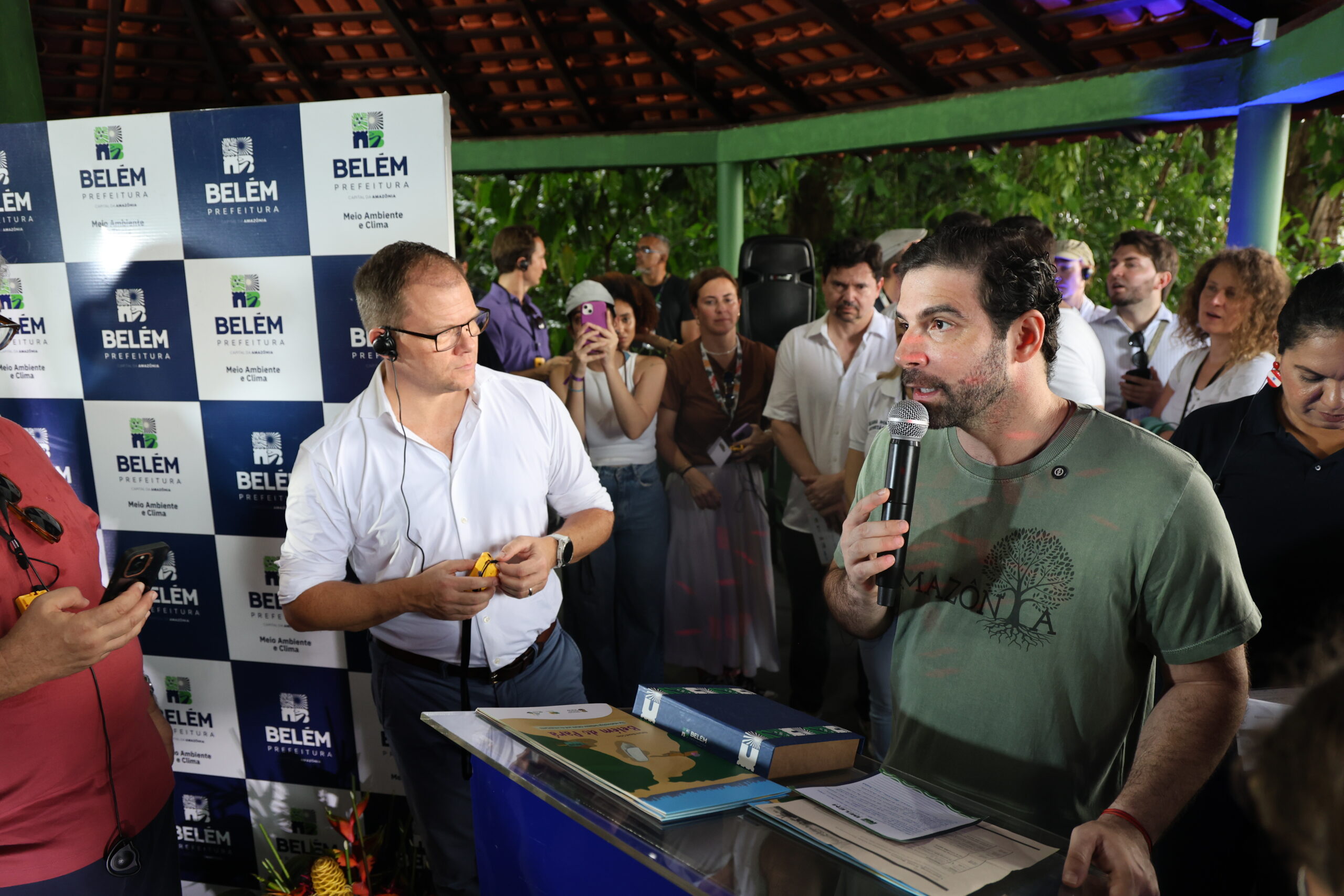
The studies recommended adaptation strategies including afforestation programmes, the creation and strengthening of green spaces, and the use of climate-appropriate construction materials to mitigate vulnerabilities.
Building on these recommendations, the planned revitalisation under Polígono dos Parques aims not only to restore ecological functions such as natural drainage and urban cooling but also to fully integrate the parks into city life. The initiative includes renewable energy and mobility solutions, green connectivity, and improved infrastructure to expand community access to green spaces.
This initiative reflects Belém’s leadership as COP30 host, demonstrating how local governments can integrate ecosystem-based approaches to improve urban resilience, enhance quality of life and protect biodiversity—setting a precedent for sustainable and inclusive urban development worldwide.
© IUCN
Catalytic financing for systemic change
The Global EbA Fund plays a key role in enabling transformational change. By supporting NbS implementation and embedding Ecosystem-based Adaptation measures into policies and governance frameworks, the Fund ensures long-term sustainability and helps communities and cities like Belém integrate adaptation into decision-making and budgetary processes beyond project lifespans.
Ali Raza Rizvi, Director of IUCN’s Global Climate Change and Energy Transition Team, emphasised the importance of early-stage investment:
“Innovative and catalytic funding enables on-the-ground action. With creativity, integrated approaches can be developed that benefit climate, nature and people.”
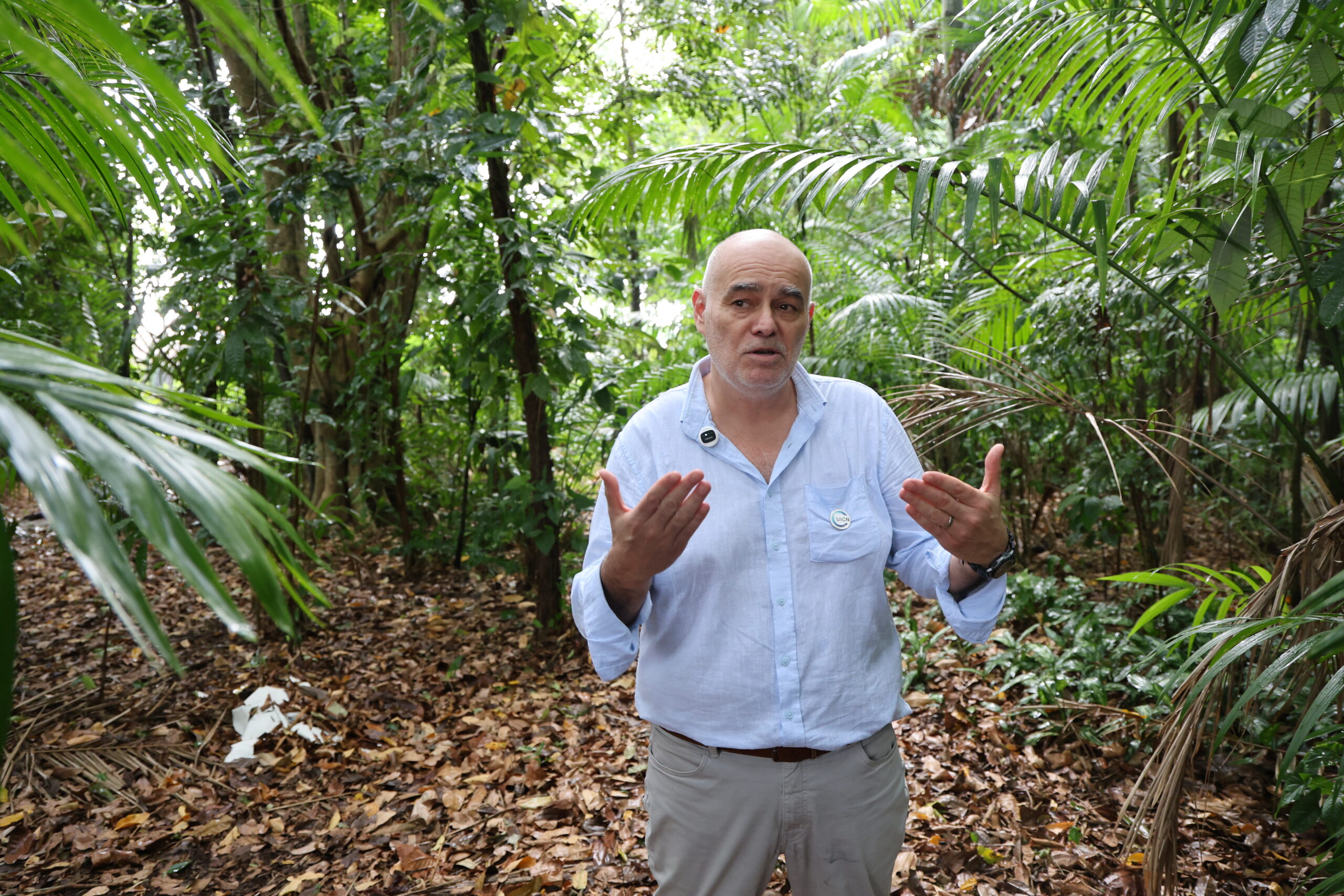
Martin Krause, Director of UNEP’s Climate Change Division, noted Belém’s global relevance:
“As a partner in the Global EbA Fund, UNEP values Belem’s pioneering efforts to link climate adaptation, forest protection and urban development. The city is implementing a package of solutions that could become a model for others worldwide.”
Gabriel Quijandría, IUCN Regional Director for South America, stressed the broader regional stakes:
“Cities that conserve and recover nature will be better equipped to face climate change. Latin America will be the most urbanised region in the world by 2050—this is where the match will be decided between climate impacts and adaptation. Many innovative solutions will emerge from this region, and we hope to apply them globally.”
Since its launch, the Global EbA Fund has supported over 50 projects across 36 countries, strengthening local action on climate adaptation and biodiversity protection, and advancing the Sharm-El-Sheikh Adaptation Agenda. It also aligns with the IPCC Sixth Assessment Report and Target 8 of the Kunming-Montreal Global Biodiversity Framework.
Looking ahead: Scaling urban Nature-Based Solutions
Building on NBCities’ success, IUCN, UNEP and ICLEI are exploring opportunities to scale the Nature-Based Cities approach in Belém and to other urban centres in Latin America and beyond. By generating replicable evidence of how urban Ecosystem-based Adaptation reduces climate risks, protects ecosystems, improves quality of life and stimulates local economies, these efforts aim to inspire other cities to adopt nature-based, inclusive and resilient urban planning. Belém’s efforts demonstrate that cities can lead the way in combining climate action, biodiversity protection, and community well-being—a model for urban resilience worldwide.